Prof. Dr. Claudius Gros
| |

|
lecture course sommer term 2025:
Quantenmechanik I - Theoretischen Physik IV
lecture course winter term 2024/25:
Machine Learning Primer
Bachelor-/Masterarbeiten:
Themen / Infoblatt
Seminar:
Complex systems & NeuroBioTheo
open PhD position:
Complex System Theory &
Machine Learning for Consciousness Research
(pdf)
Mailing address:
Institute for Theoretical Physics
Goethe University Frankfurt
Box 111932
60054 Frankfurt/Main
Germany
|
Venue:
Campus Riedberg
Physics building
room number 01.132
Max-von-Laue Str. 1
60438 Frankfurt/Main
|
| |
Contact:
phone: +49 69 798 47818
fax : +49 69 798 47832
e-mail:
click to show email
|
Anne Metz - secretary
phone: +49 69 798 47817
fax : +49 69 798 47832
e-mail:
click to show email
|
The textbook
Complex and Adaptive Dynamical Systems
A Comprehensive Introduction
is available as a
Springer textbook
(Amazon).
First / second / third / fourth / fifth edition
2008 / 2010 / 2013 / 2015 / 2024.
See also the related
lecture course and the
table of contents.
Including now a chapter on "Complexity of Machine Learning".
| |
![[ Complex and Adaptive Dynamical Systems. A Comprehensive Introduction ]](Images/CADS_2024.webp)
|
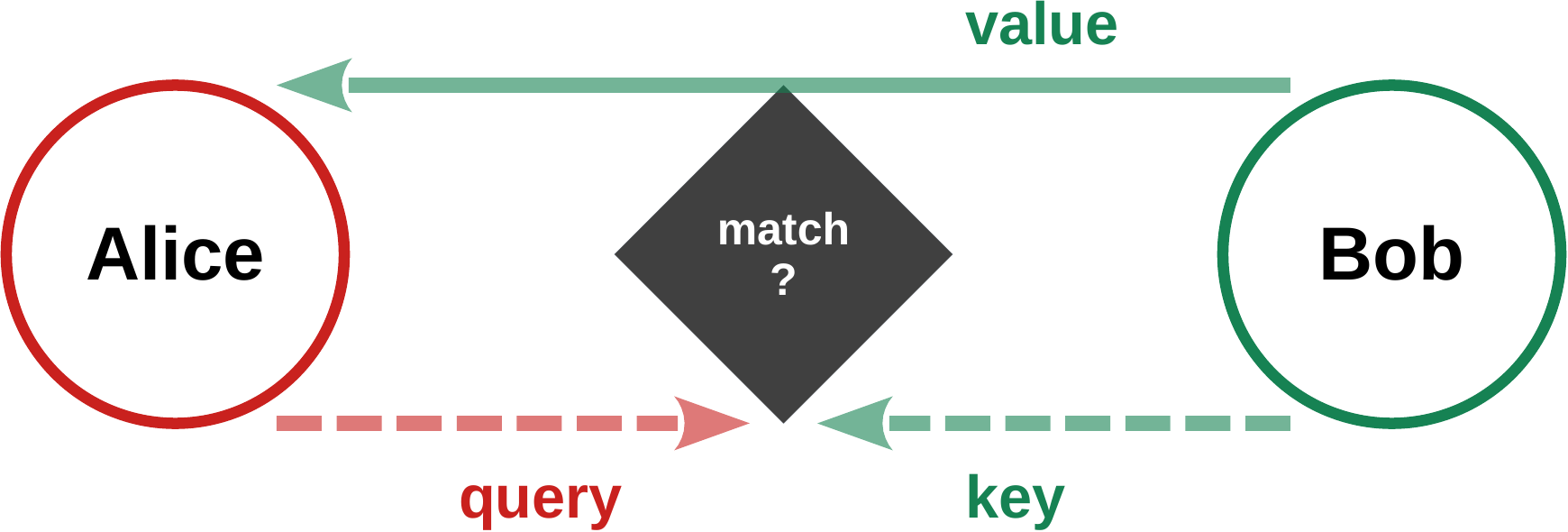
Physics of AI
Large language models based on the attention
mechanism are at the core of generative AI,
such as universal chatbots like ChatGPT. As of
today, a full understanding of the workings of
highly performing AI architectures, like
transformers, has however not been attained.
Within physics of AI, one of our main research
activities, one performs an in-depth analsis
of basic ML principles. A prominent example is
the
attention mechanism, which allows for information
routing via the Query, Key and Value framework.
For the analysis, the toolbox of dynamical and
complex systems theory is used.

Complex Systems
Complex systems abound in the world, being
essential for describing, e.g., biological
and artificial cognitive system. In the guise
of game theory, complex systems theory describes
human behavioral strategies, such as
envy.
We develop new organizational principles for
a range of cognitive systems. An example is
the
tragedy of the commons,
which occurs when natural resources are over-exploited.
A wide-spread phenomenon in ecology is dormancy,
which led us to propose
Spore Life, a cellular
automaton introducing dormant cells to the
classical Game of Life.
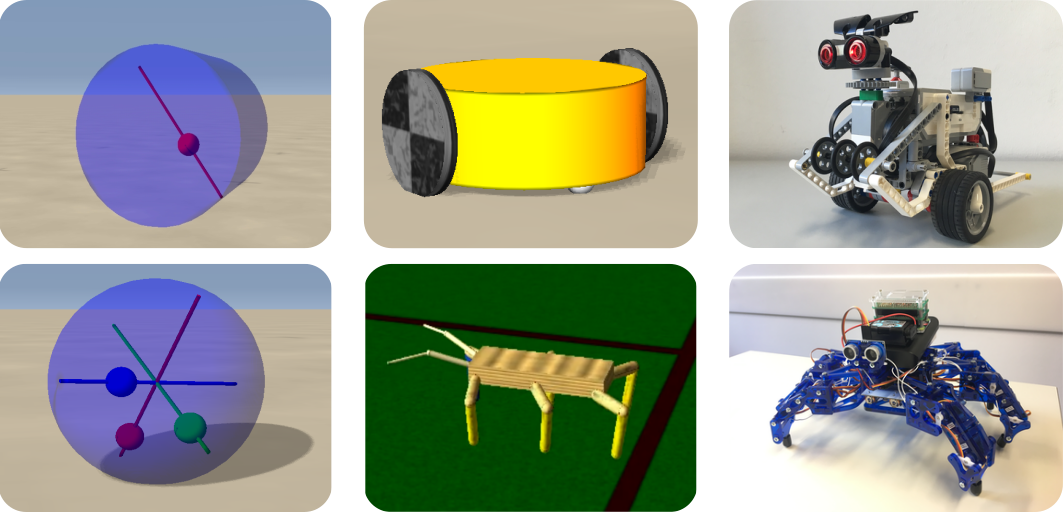
Self-Organized Robotics
Which are the possible generating principles for locomotion?
As an alternative to classical top-down control, we study
the emergence of self-organized motor primitives within
the sensory-motor loop through an overarching principle,
'attractoring'.
The underlying principle is implemented in embodied simulated
and real-world robots and studied subsequently within
dynamical systems theory. We find, that complex behavioral
patterns may emerge from simple generating principles
The resulting possibility of 'kick control' contrasts with the
standard perspective of objective-controlled movements.
The Genesis project
We studied the feasibility of an interstellar mission which would
lay the foundations of a self-developing ecosphere of unicellular
organisms on otherwise life-less exoplanets. This proposal motivates
to reconsider the role of humanity in a larger context.
- Shall humanity take an active role in our corner of the galaxy?
- Which ethical aspects are involved, when helping life
to flourish elsewhere?
- Why should we undertake an endeavor without tangible benefit
for humanity?
The
Genesis project
has seen a substantial media resonance.
We showed in conjunction that interstellar
probes may be decelerated using magnetic sails.
|